Home / Newsletter
Health claims, graded from the studies
TL;DR
One free email a week. Each issue grades 3–5 health claims A, B or C from the published studies, with sources linked. No sponsors in the grades. Not medical advice.
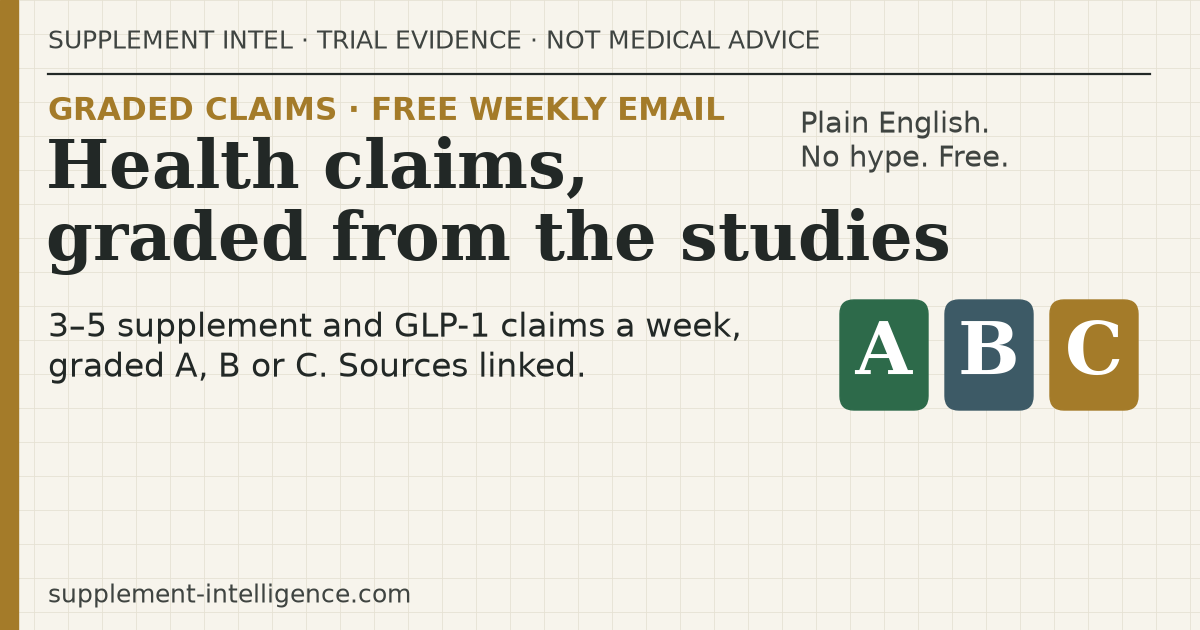
Graded Claims is a free weekly email from Supplement Intelligence. Each week we take a few supplement, GLP-1 and peptide claims you will see online and check them against the research. Plain English, sources linked, not medical advice.
What do you get in each issue?
- 3–5 claims a week, graded. Each claim gets a short verdict and links to the studies behind it.
- An A, B or C grade on every claim. A means strong human trial evidence for the outcome claimed; B means smaller or less direct evidence; C means animal, lab or mechanism evidence, or comparisons between separate trials.
- No sponsors in the grades. Grades come from the studies. Any sponsor or referral link is labeled and never changes a grade.
Free. Unsubscribe from any issue.
Where can I read past issues?
Issues are published on the Graded Claims newsletter site. For a sense of the format, these site guides use the same grading:
- Retatrutide: what it does, side effects, and trial results
- Retatrutide dosing schedule: doses and titration used in trials
- Tirzepatide vs retatrutide: what separate trials show
- BPC-157 side effects: what human studies show
- All GLP-1 evidence guides
What do readers ask about Graded Claims?
How often is Graded Claims sent?
Once a week. Each issue grades 3–5 health claims you are likely to see online.
What do the A, B and C grades mean?
Grade A means the claim is backed by large randomized trials in people for the outcome claimed. Grade B means the evidence is smaller, earlier or less direct, such as Phase 2 trials. Grade C means the claim rests on animal or lab studies, mechanism, or comparisons between separate trials.
Is Graded Claims medical advice?
No. It summarizes published research in plain English. It does not tell anyone what to take, how much, or whether to start or stop a medicine.
Do sponsors affect the grades?
No. Grades come from the studies. If an issue ever includes a sponsor or referral link, it will be labeled, and it will not change any grade.
What does it cost?
It is free. You can unsubscribe from any issue.
Want the next one graded? Every week we take a few claims you'll see online and check them against the research. Plain English, sources linked, not medical advice.
Get the free weekly emailGraded Claims summarizes published research for education. It is not medical advice. See our research standards and privacy policy.